
"Central American Countries"
1000 article(s) found
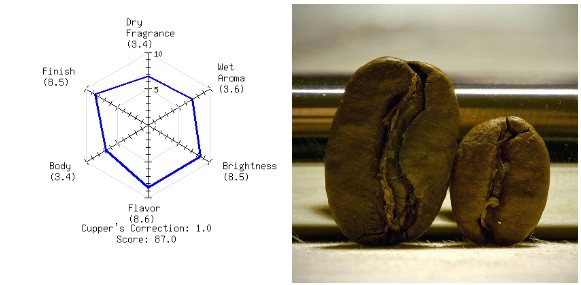
American Coffee Manor in Nicaragua Giant Coffee Raw beans Nicaragua SHB Elephant beans
CONTENT Chinese name: Nicaragua English name: Nicaragua Cup Test score: 88.17Commodity Specification: 1000g Origin: Nicaragua Madriz harvest year: 2012 10ram 11 altitude: 1400 m above sea level: Marago Rippi Maragogype treatment: natural drying after washing Washed and Sun drying grade: SHB taste: crisp, clean and delicate

The influence of delicious Central and South American Coffee beans on World Coffee what do you mean by premium coffee beans?
There are many coffee producing areas in Central America, which show their elegant demeanor in all the major coffee competitions. As an important part of boutique coffee, what is his influence on the world boutique coffee? What are his unique features worth imitating and learning? Next, let the editor study with you. The first point is that it has greatly increased the market price of coffee beans.

Guatemala Vivette Nango-Limonar Manor Baking suggestion, Cup Test score
For the exchange of professional baristas, please pay attention to the coffee workshop (Wechat official account cafe_style) SHB of Guatemala-Limonar Manor Coffee is the most important economic income of Guatemala. About 125,000 people are engaged in coffee production. The largest export products account for 40% of the total export earnings. Coffee beans and coffee are grown in almost all regions of the country.

A brief introduction to the Market Price of Fine Coffee Bean varieties in Tian Chi Manor with moderate acidity
In many countries, coffee production will be seriously affected for political reasons. Nicaraguan coffee industry is no exception. The 1979 revolution forced coffee planters to flee to Miami. A period of indecision followed, when the government considered whether to redistribute land (including many plantations), which led to a shortage of coffee and a decline in production since the early 1970s
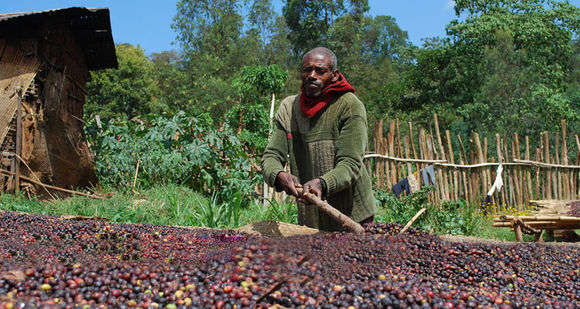
Fine American Coffee Guatemala New Oriental Region Guava Plain Manor Wine Fragrance Solarization SL28
Guatemala is one of the most important coffee-producing countries in Central America. The mountains in Guatemala extend for a long time, and the regional climate varies from one place to another. Therefore, eight coffee-producing areas in Guatemala are created. They are all located on the highland terrain with subtropical climate. The rainfall is abundant and stable. The fertile volcanic ash soil is the perfect environment for coffee trees to grow. Plan del Guayabo is located next to Volcn de Suchitn

A brief introduction to the cultivation of boutique coffee beans in moderate acidity Tianqi Manor, geographical location, climate and altitude
In many countries, coffee production will be seriously affected for political reasons. Nicaraguan coffee industry is no exception. The 1979 revolution forced coffee planters to flee to Miami. A period of indecision followed, when the government considered whether to redistribute land (including many plantations), which led to a shortage of coffee and a decline in production since the early 1970s

Aromatic and mild Salvadoran coffee Flavor Taste Manor Features Fine coffee beans Introduction
The flag of El Salvador was adopted in 1822, revoked in 1865, restored in 1912, and officially recognized as the national flag in the Constitution of 1972. The flag is rectangular in shape and has an aspect ratio of 335:189. The flag is composed of three parallel rectangles of blue, white and blue from top to bottom. The white part is painted with the national emblem pattern in the center. El Salvador was a member of the former Central American Federation, and its flag was

A brief introduction to the Origin, Development, History and Culture of Fine Coffee beans in Tian Chi Manor with moderate acidity
In many countries, coffee production will be seriously affected for political reasons. Nicaraguan coffee industry is no exception. The 1979 revolution forced coffee planters to flee to Miami. A period of indecision followed, when the government considered whether to redistribute land (including many plantations), which led to a shortage of coffee and a decline in production since the early 1970s

A brief introduction to the processing method of grinding degree and roasting degree of Tianci Manor fine coffee beans with moderate acidity
In many countries coffee production is severely affected for political reasons. The coffee industry in Nicaragua is no exception. The revolution of 1979 forced coffee growers to flee to Miami. A period of uncertainty ensued as the government considered whether to reallocate land (including many plantations), resulting in coffee shortages and declining yields from the early 1970s.

Introduction to the fragrant, pure and slightly sour coffee flavor of El Renas Manor.
The national emblem of El Salvador was used on September 15, 1912. The national emblem of El Salvador is an equilateral triangle whose three yellow lines represent equality, truth and justice respectively. Five volcanoes rise between the Pacific Ocean and the Atlantic Ocean, symbolizing the five countries in Central America. The pole of freedom and the red cap of freedom stand high on the top of the mountain, radiating the light of freedom and liberation.

Introduction of Guatemalan boutique coffee bean brands with very strong flavor
There is a wide gap between the rich and the poor in Guatemala, with the top 10% of the population accounting for 42.4% of the country's wealth, while the bottom 10% of the population accounts for only 1.3% of the country's wealth, with a Gini coefficient of 0.55. Starting from January 1, 2010, the minimum wage for at-risk workers was raised to 56 quetzales ($6.71) per person per day, plus a bonus of 250 quetzals ($29.97) per month. [1] Medical 2009, Guatemala
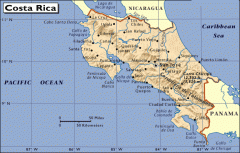
Home-baked boutique coffee (8) Costa Rica
What word is used to describe Costa Rica? Pure. Soft. Equilibrium. This Central American bean has a pure taste that no beans can have, too pure to have any miscellaneous flavor, and this purity translates more into a soft and balanced taste, including its rich fruity aromas. are fresh and lively notes with the natural sweet and sour fruit. In the middle

A brief introduction to the History and Culture of the Origin and Development of Fine Coffee beans in Tianqi Manor with moderate Particle size
In many countries, coffee production will be seriously affected for political reasons. Nicaraguan coffee industry is no exception. The 1979 revolution forced coffee planters to flee to Miami. A period of indecision followed, when the government considered whether to redistribute land (including many plantations), which led to a shortage of coffee and a decline in production since the early 1970s

Introduction to the planting environment of Costa Rican coffee flavor manor with mellow taste
Gome established diplomatic relations in 1851. The two countries have close relations and frequent exchanges of high-level visits. The United States is Colombia's largest trading partner. In 2007, Colombia exported 1.142 billion US dollars to the United States and imported 2.865 billion US dollars from the United States. The United States has always regarded Colombia as a model for democracy in Latin American countries and provided a lot of economic assistance. The two sides have maintained close cooperation in anti-terrorism, drug control, military and other fields. The United States has built a Latin American police academy and an American warship in Colombia.

A brief introduction to the Origin, Development, History and Culture of Fine Coffee beans in the Manor
Nepalese coffee cultivation and production has a unique environment, the spread of fertile volcanic ash soil, coupled with shade planting methods, to establish a good production quality, Nepalese coffee has a rich mellow and fragrant taste, moderate acidity and a good sense of balance of bitter taste, which is regarded as top grade in the eyes of international coffee experts. Because of the national character of the Latin American people, foreign buyers
Guava Plain Manor, New Oriental region of Guatemala, Central and South American Coffee
Guatemala is one of the most important coffee producing countries in Central America, with long mountains and different regional climates, thus creating eight major coffee producing areas in Guatemala, all located on the highland topography of the subtropical climate, with abundant and stable rainfall and fertile volcanic ash soil is an excellent environment for coffee trees to grow. Plan del Guayabo is located next to the Volcn de Suchitn volcano.

Panama Coffee-The Best Value for Money Central American Coffee
Panama has emerged as one of the world's best coffee producers since three years ago, surprising countries that have been at the forefront of developer production for many years. Panama's main coffee producing area is in the west, close to the Costa Rican border, producing the best washed coffee. Low temperature and stable climate at high altitudes in Panama compared to coffee beans grown at low and middle altitudes

Introduction to the characteristics of Happy Manor Coffee Variety producing area with rich aroma, smooth and meticulous
Nicaragua is one of the main coffee-producing countries, producing high-quality coffee. Even coffee from the Antigua Mountains of Guatemala, which is famous in Asia, imports raw beans from Nicaragua. Although Nicaraguan coffee is not famous in Asia, Nicaragua coffee is already famous all over the world (Starbucks has many cooperative coffee farmers in Nepal), while several in Central America

Introduction of coffee flavor and taste characteristics of Mercedes Manor in El Salvador with excellent balance
El Salvador's domestic topography is mainly mountainous, plateau, volcanic, known as the country of volcanoes, Santa Ana active volcano 2385 meters above sea level, the highest peak in the country; the northern part of the country is the Lompa Valley and the southern part is the narrow coastal plain. Climatic characteristics all over El Salvador has a tropical climate, with an annual average temperature of 28 ℃; dry season from November to April and rainy season from May to October; coastal and lowland atmosphere

Introduction to the baking degree of high-quality coffee beans in El Salvador coffee producing areas
The Salvadoran flag was launched in 1822, rescinded in 1865 and restored in 1912. The Constitution of the year of the Salvadoran Flag in 1972 was officially established as the national flag. The national flag is rectangular, with a ratio of length to width of 335 to 189. From top to bottom, the flag is connected by three parallel equal horizontal rectangles of blue, white and blue, and the central part of the white part is painted with the national emblem. Because El Salvador used to be